
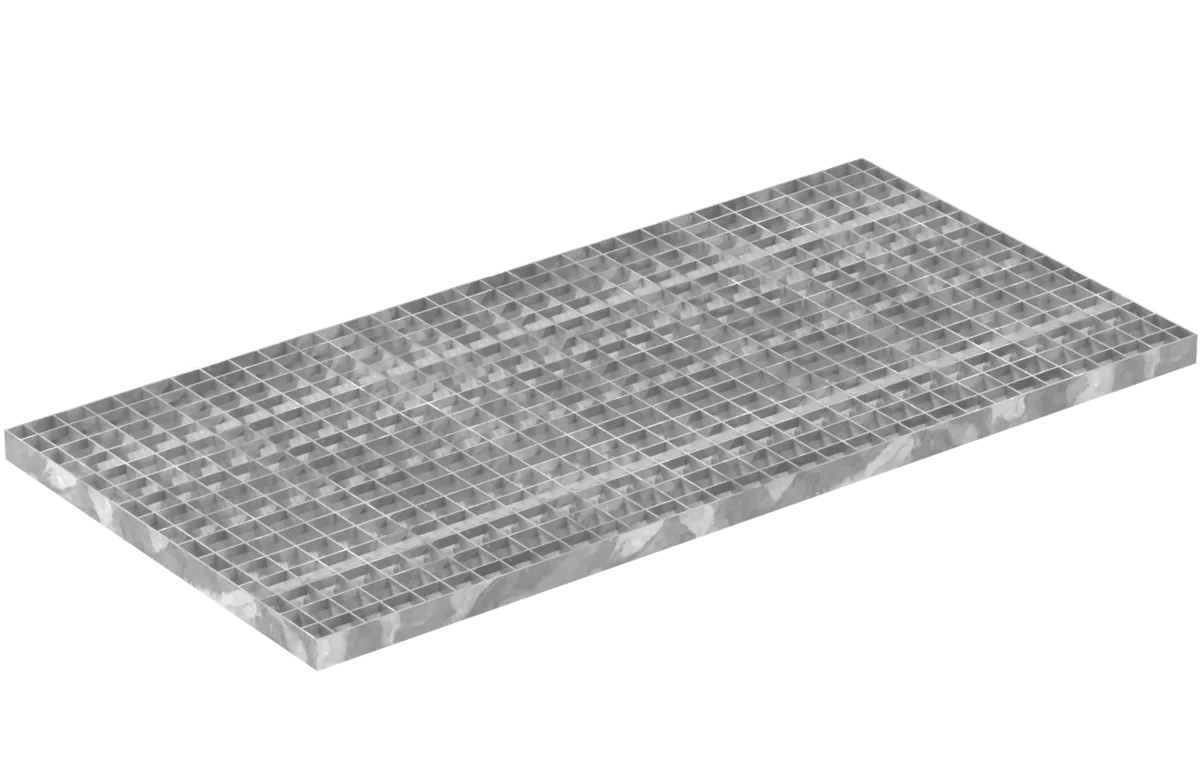
// Precision that carries // FeNau
Gratings
made to measure.
Press-locked gratings for light wells, stair treads and walkways.
Hot-dip galvanised or stainless steel. From stock or made to order.
Custom gratings, briefly explained
FeNau manufactures custom gratings from a single piece: press-locked gratings to DIN 24537, hot-dip galvanised to DIN EN ISO 1461 or in stainless steel grades 304 (V2A) and 316L (V4A). Choose dimensions, load, mesh, slip resistance, frame and cut-outs online in 9 steps. The structural design is built into the configurator and the price is fixed immediately.
- Production
- made to measure, from 1 piece
- Standard
- DIN 24537
- Galvanising
- DIN EN ISO 1461
- Dimensional tolerance
- +0 / −4 mm to RAL-GZ 638
- Lead time
- approx. 3 to 4 weeks (standard)
- Structural design
- checked in the configurator
Material with
character.
Hot-dip galvanised steel is the standard. Stainless steel when appearance, salt or chlorides are the deciding factor.
- Steel, hot-dip galvanisedStandard for indoors and outdoorsGalvanised to DIN EN ISO 1461 in a dip bath at approx. 450 °C, only after cutting. This protects the cut edges too. Over time the surface turns matt grey.
- Stainless steel 304 (1.4301), pickledVisible areas such as terraces, balconies and house surroundsA uniform look without a zinc layer. Stainless steel has a longer production time.
- Stainless steel 316L (1.4404), pickledSalt- or chloride-laden environmentsFor road salt, coastal locations or swimming pools, where 304 reaches its limits.
- Steel, untreatedFor further processing onlyUntreated, for your own coating or welding work. No guarantee of the stated load capacity.
// Design // FeNau
Understanding how
a grating is built.
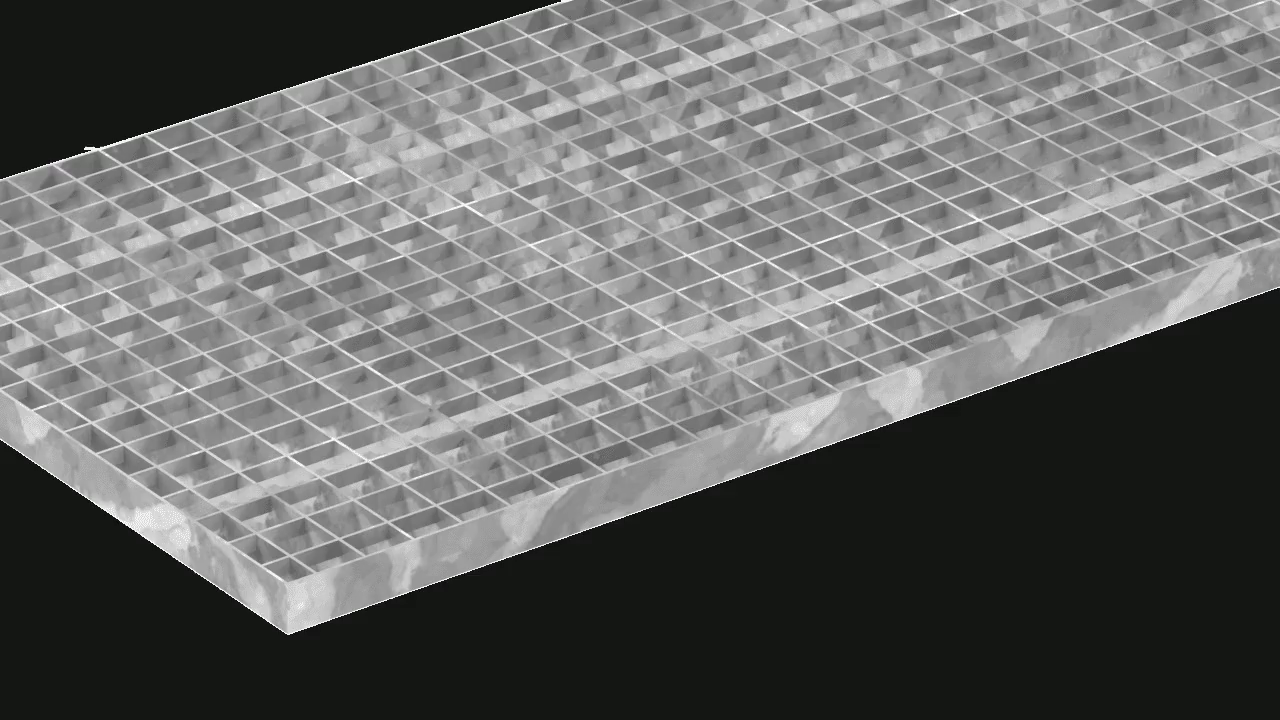
Bearing bar, cross bar, mesh size, edge banding. Select a component in the 3D view or in the list.
The load from support to support.
Bearing bars take the load and span the distance between the supports. Heights from 20 to 120 mm, thicknesses from 2 to 5 mm. The designation 30/2 means 30 mm high and 2 mm thick.
Which mesh
where?
The mesh determines light, walking comfort and safety. The first figure always refers to the bearing bar.
The standard
Proven for light wells, industry and walkways. Plenty of light, low weight and usually the fastest to produce.
Close mesh
More comfortable to walk on and holds back leaves and small parts. The right choice in front of entrances and on public paths.
Closer cross bars
The second figure refers to the cross bar. 30/20 is closer than 30/30; the bearing bar pitch stays at 30 mm.
Diagrams 100 × 100 mm to scale. Bearing bars in lime, cross bars in grey.
| Location | Mesh | Why | Basis |
|---|---|---|---|
| Public paths, entrances, shop windows | 30/10 | Clear opening in one direction no more than 10 mm, so heels do not get caught. | DGUV Information 208-007 |
| Working platforms and walkways | 30/30 | A ball with a diameter of 35 mm must not fall through. | DIN EN ISO 14122-2 |
| Above permanent workstations | 30/10 | A ball with a diameter of 20 mm must not fall through. | DIN EN ISO 14122-2 |
| Light well at a house | 30/30 oder 30/10 | 30/30 lets in more light, 30/10 holds back more leaves. There is no regulation. | FeNau recommendation |
Slip resistance
when it gets wet.
Not every grating needs serrations. It depends on moisture, slope and slippery substances.
Usually without serrations
- Dry, level surfaces without a slope
- Light wells and indoor walkways
- Water drains through the mesh
With slip resistance
- External stairs, ramps and slopes
- Wet, snow or ice
- Oil, grease or other slippery substances
- Busy work routes
Versions available from FeNau
- Serrated bearing bar
- Serrations on the top edge of the bearing bars.
- Serrated cross bar
- Serrations on the cross bars. The only option for mesh 30/10.
- Bearing bar and cross bar
- Serrated in both directions, for the highest requirements.
Guide values for workplaces
| Area | R group |
|---|---|
| External entrance areas | R 11 or R 10 |
| External stairs | R 11 or R 10 |
| External footpaths | R 11 or R 10 |
| Loading ramps, uncovered | R 12 or R 11 |
| External inclined ramps | R 12 or R 11 |
Not mandatory for private use, but a good reference. Our advisers will tell you which R group a version achieves.
// Advice // FeNau
Need
help?
Unsure about size, load or a special shape? Give us a call and we will sort it out quickly on the phone.
+49 911 97917230Mon to Thu 8 am to 4 pm · Fri 8 am to 2 pm
// Planning // FeNau
Measure correctly
before you order.
Four steps decide whether the grating fits. Production follows RAL-GZ 638, so it is never larger than ordered.
Set the bearing direction
The bearing bars run from support to support. If one side is lost, for example due to insulation at the light well, turn the direction.
Check the support
At least approx. 30 mm of support per side, a little more for taller bearing bars. Never less than 25 mm in service.
Measure in several places
Openings are rarely exactly square. Measure length and width several times and take the smallest dimension.
Set the order size
Order the clear internal dimension, i.e. the smallest value measured. Do not deduct anything: the fitting clearance is included in the +0 / −4 mm tolerance to RAL-GZ 638. With a frame, enter the outer dimension of the frame and the configurator calculates the grating.
- Smallest clear dimension
- 1,000 × 600 mm
- Deduction
- none
- Order size
- 1,000 × 600 mm
- Tolerance
- +0 / −4 mm
How much does
the grating need to carry?
1 kN is roughly 100 kg. For vehicles, the wheel load on a fixed contact area is what counts.
| Load capacity | Equivalent to | Typical use | Contact area |
|---|---|---|---|
| Pedestrian Distributed load for people | |||
| 1.0 kN | approx. 100 kg | Maintenance routes, occasional foot traffic | Distributed load |
| 1.5 kN | approx. 150 kg | Light well, terrace, platform in private areas | Distributed load |
| 2.0 kN | approx. 200 kg | Public or more heavily used areas | Distributed load |
| Trafficable Wheel load on a contact area | |||
| 4.5 kN | 450 kg wheel load | Car up to approx. 1.7 t | 200 × 200 mm |
| 10 kN | 1,000 kg wheel load | Van up to 3.5 t | 200 × 200 mm |
| 25 kN | 2,500 kg wheel load | Small lorry up to 7.5 t | 200 × 200 mm |
| Heavy duty Wheel load on a long contact area | |||
| 50 kN | 5,000 kg wheel load | Lorry up to 30 t | 200 × 600 mm |
| 100 kN | 10,000 kg wheel load | Heavy goods vehicle up to 60 t | 200 × 600 mm |
Guide values from the configurator. It sizes the bearing bars structurally; in expert mode this check is skipped.
Gratings
in use.
From the light well of a family home to the walkway in a factory hall. Every application has its own load and mesh.
Light well
The most common application. For pedestrian use 1.5 kN is usually enough; in a driveway at least the car class. Check the support all round – insulation can cost you one side.
Terrace and house surround
Visible areas around the house, often in 304 stainless steel. Mesh 30/10 is comfortable to walk on and holds back leaves.
Walkway and platform
Plant rooms, installations and platforms. Mesh to DIN EN ISO 14122-2, slip resistance in wet or oily conditions.
Cover and channel
Close openings while letting light and water through. Order cut-outs for pipes and columns at the same time.
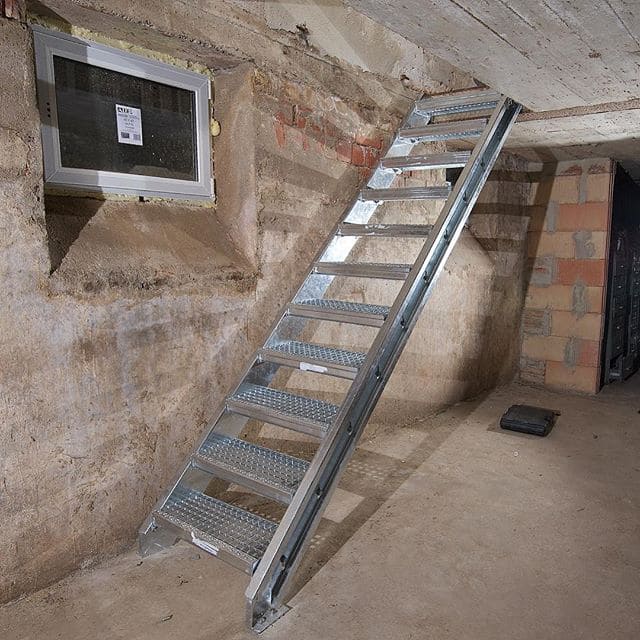
Grating stair tread
Standard treads are ready at fenau.eu. Plan custom treads with our advisers.
// Industry // FeNau
Gratings for
industrial applications.
In industry and commerce, press-locked gratings carry maintenance walkways, plant platforms and trafficable areas. FeNau makes them to measure with the right load capacity, mesh and slip resistance to DIN EN ISO 14122.
Walkways and platforms
Maintenance routes on plant, platforms and plant rooms. Openings to DIN EN ISO 14122-2, slip-resistant where needed.
Machinery and plant
Covers, operator stands and enclosures with cut-outs for pipes, cables and columns.
Trafficable areas
Access roads, hall aisles and load zones. The configurator sizes the load capacity and bearing bar height for the chosen use.
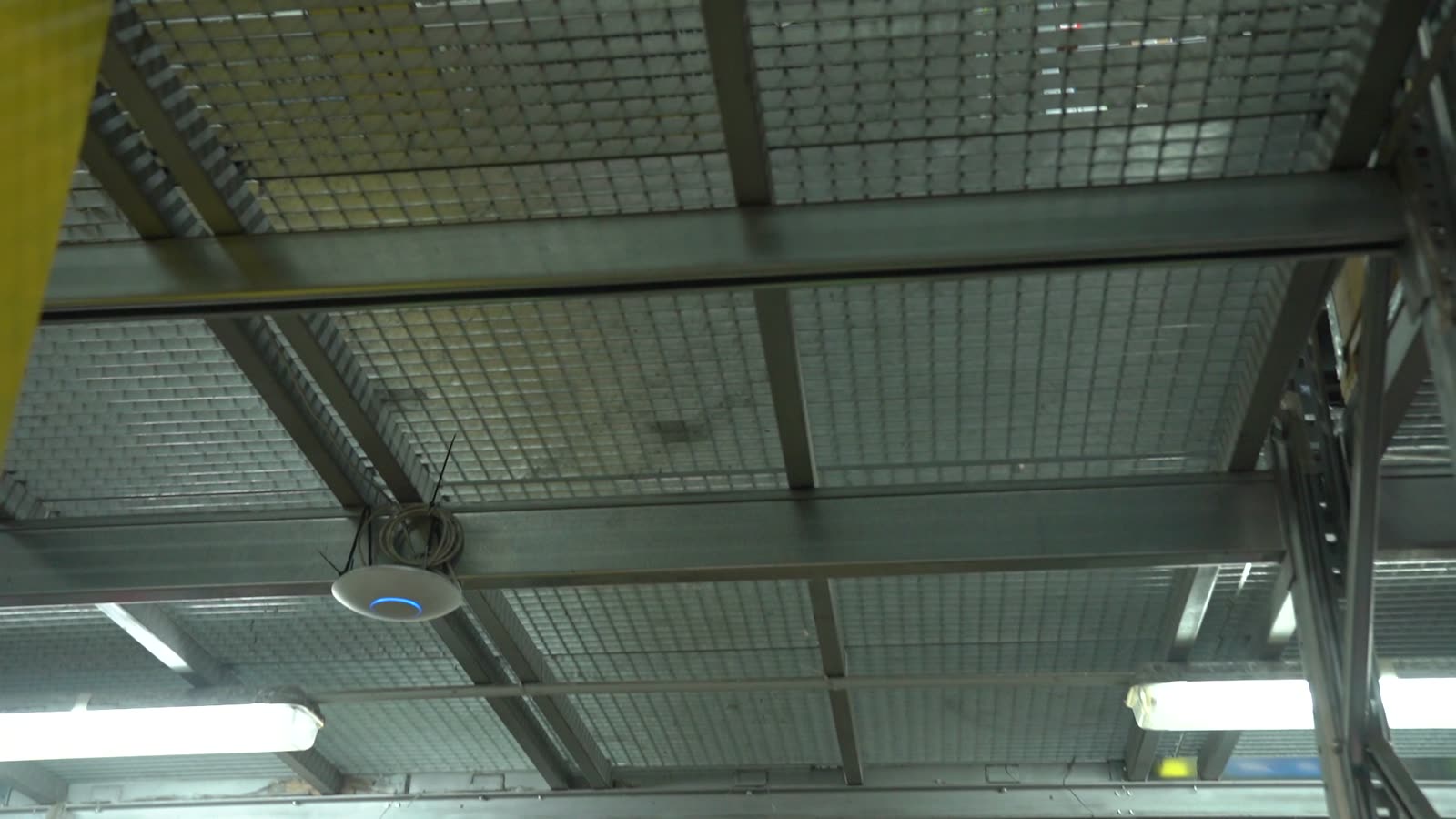
View from below through a hot-dip galvanised press-locked grating beneath a steel girder structure in an industrial hall. Background film: industrial press-locked grating beneath a steel girder structure.
// Ordering // FeNau
In 9 steps
to your grating.
The configurator guides you through every decision and only shows what works structurally.
Load capacity
Pedestrian, trafficable or heavy duty.
Support
How far the grating rests on each side.
Mesh
30/30, 30/10 or 30/20.
Material
Galvanised, 304, 316L or untreated.
Size
Length and width in millimetres.
Bearing bar
Height and thickness to suit the structural design.
Slip resistance
None, bearing bar, cross bar or both.
Frame
Optional seating frame made of L-angle.
Cut-out
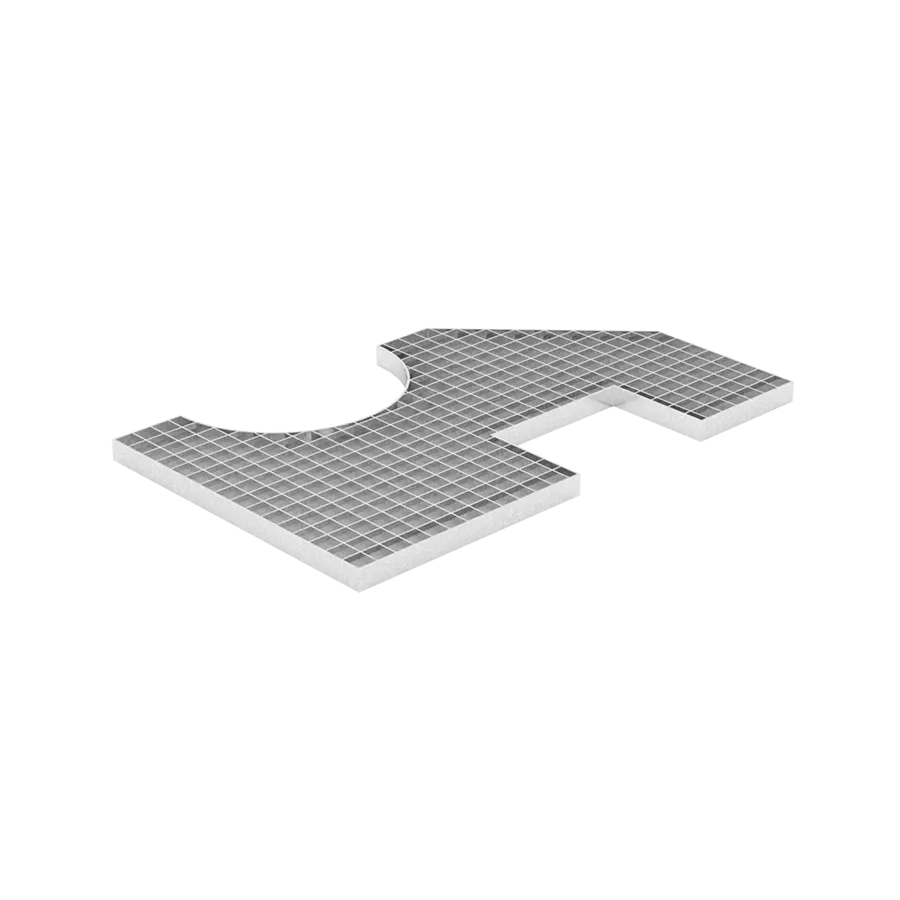
Round from Ø 130 mm, rectangular from 65 × 65 mm.
In the configurator
- Price including VAT shown while you choose
- Only structurally suitable bearing bars offered
- Automatic sketch before you order
- From 1 piece, no quotation loop
With advice
- Special structural cases or expert mode without checks
- Special features such as nosing, kick plate or hinge
- Custom stair treads and larger series
- Direct delivery from the factory
// Drawing // FeNau
The plan,
before you order.
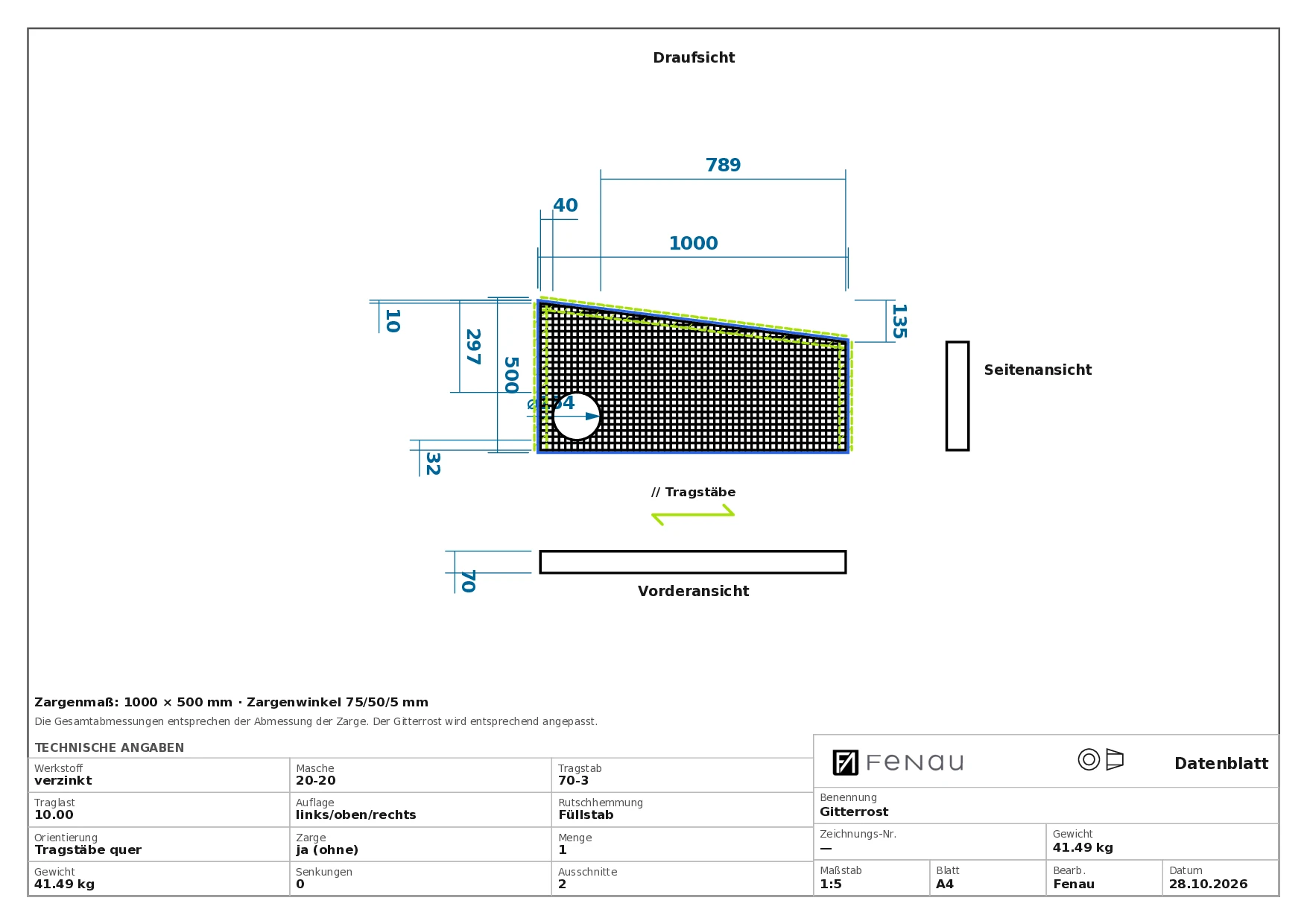
The configurator creates the data sheet before you order. Plan view, elevations, dimensions, mesh, cut-outs, frame and weight on a single sheet.
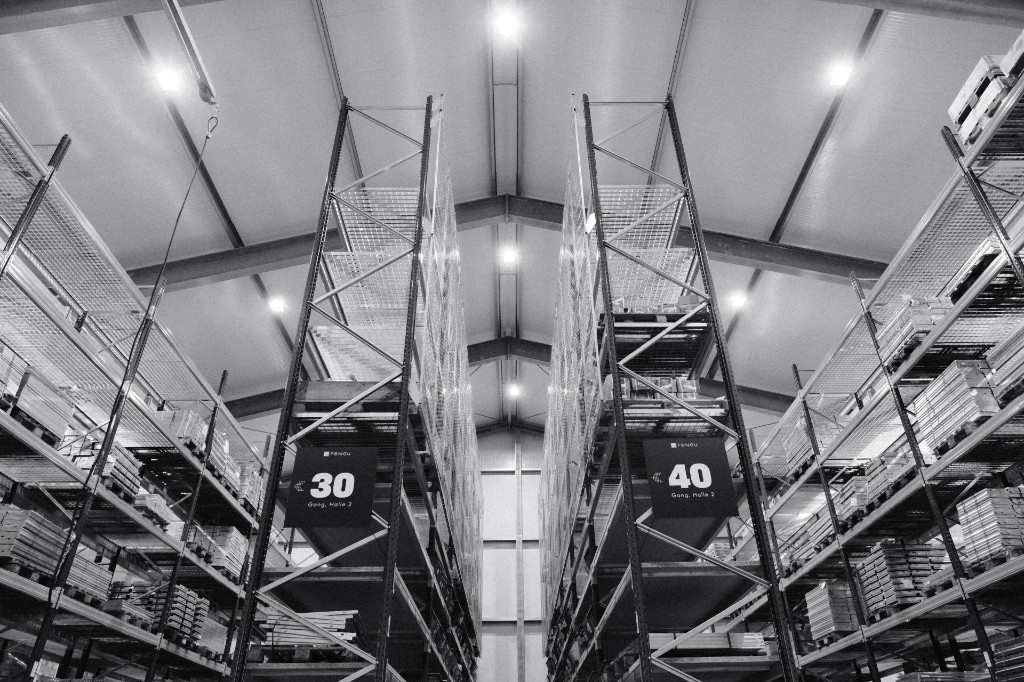
Large collection warehouse.
Standard products from stock.
Standard gratings are ready for collection in Langenzenn and usually ship the next day.
// About us // FeNau
Expertise
in metal.
For more than a decade, FeNau GmbH has stood for quality and reliability in metalwork components. As a specialist partner we supply trades, industry and DIY customers with custom gratings, stainless steel and products for railing, structural and marine applications.
Our aim is not just to sell products but to provide solutions. Through close cooperation with manufacturers and strict quality control, we make sure that every part leaving our warehouse meets the highest standards. Whether hot-dip galvanised press-locked gratings, precisely fitting cut-outs or fine stainless steel versions, FeNau gives you professional quality at fair prices.
With our modern logistics centre in Langenzenn we respond flexibly to customer requests and keep our range readily available. We see ourselves as your partner and support you with expertise and commitment in realising your projects.
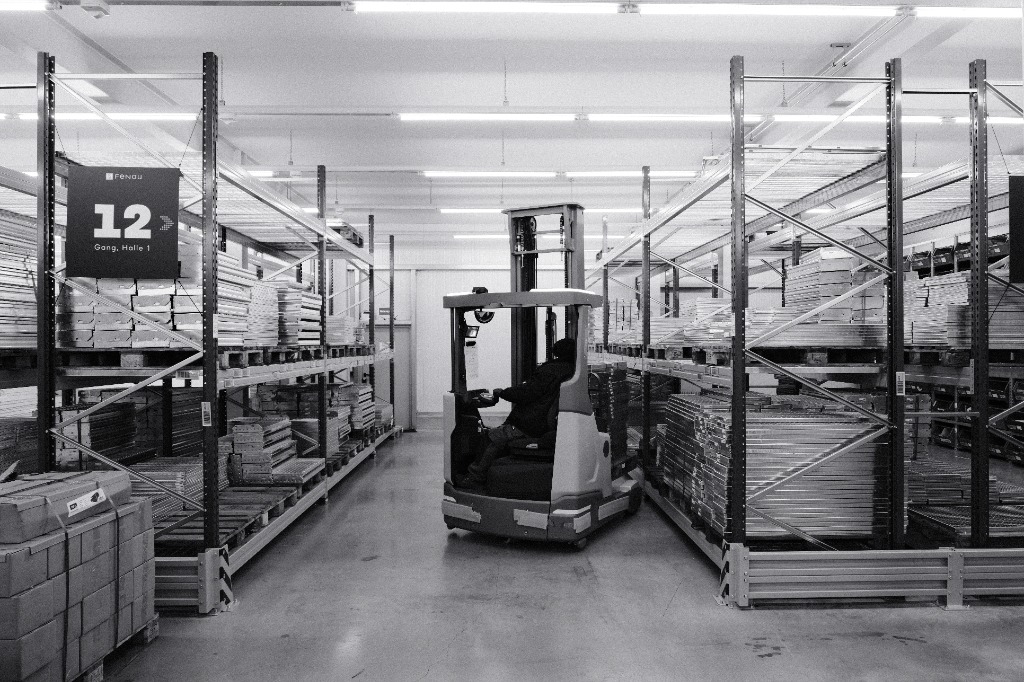
Short distances.
Clear aisles.
Standard goods and custom orders are handled in Langenzenn. This is how long made-to-measure orders take.
Delivery times
- Bearing bar 25 to 60 mm, thickness 2 or 3 mm
- approx. 3 to 4 weeks
- Bearing bar 20 mm
- approx. 5 to 6 weeks
- Thickness 4 or 5 mm, bearing bar from 70 mm
- approx. 6 to 7 weeks
- Stainless steel 304 and 316L
- approx. 8 weeks
Standard version without additional work, as of October 2026. Slip resistance adds 2 working days.
// FAQ // FeNau
Questions about gratings
made to measure.
The price depends on dimensions, material, mesh, load capacity and extras such as slip resistance, frame or cut-outs. In the FeNau configurator you see the price including VAT while you choose, without requesting a quotation. Shipping costs depend on the destination country.
Measure the opening in several places and take the smallest clear dimension. That is the order size. Do not deduct anything: the fitting clearance is included in the +0 / −4 mm tolerance to RAL-GZ 638, and the grating is never larger than ordered. With a frame, enter the outer dimension of the frame.
Always from support to support. The ends of the bearing bars must rest securely on both sides, as a guide with at least approx. 30 mm. If a support is lost, for example due to thermal insulation at the light well, turn the bearing direction. The cross bars carry only a small share of the load.
For pedestrian light wells at a house, approx. 1.5 kN, i.e. around 150 kg, is usually enough. If the well is in a driveway or a parking space, choose at least the car class with a 450 kg wheel load. The configurator then shows only structurally suitable versions.
30/30 mm is the standard for light wells, industry and walkways and is usually the fastest to produce. 30/10 mm is a close mesh and the right choice in front of entrances and on public paths. 30/20 mm has closer cross bars than 30/30; the bearing bar pitch stays at 30 mm. The first figure always refers to the bearing bar.
Hot-dip galvanised steel to DIN EN ISO 1461 is the standard for indoors and outdoors. Stainless steel 304 (1.4301) suits visible areas such as terraces, balconies or house surrounds. 316L (1.4404) is intended for salt- or chloride-laden environments. Stainless steel has a longer production time.
Usually not in dry, level areas, because water drains through the mesh. It makes sense on external stairs, ramps, slopes and in wet, snowy or oily conditions. FeNau serrates the bearing bar, the cross bar or both. With mesh 30/10, only the cross bar is possible.
The edge banding is the flat-bar border on the grating itself. The frame is a separate L-angle surround into which the grating is laid. It is screwed in place or cast into concrete with wall anchors. With a frame, enter its outer dimension and the configurator reduces the grating to fit.
Yes. Round cut-outs from Ø 130 mm and rectangular ones from 65 × 65 mm are added directly in the configurator and checked in the automatic sketch. Cut-outs can change the load capacity, especially where bearing bars are interrupted.
Standard versions with bearing bars of 25 to 60 mm and a thickness of 2 or 3 mm take approx. 3 to 4 weeks. Bearing bar 20 mm approx. 5 to 6 weeks, thickness 4 or 5 mm and bearing bars from 70 mm approx. 6 to 7 weeks, stainless steel approx. 8 weeks. As of October 2026.
With grating clips that match the mesh and grating height. In workplaces and at fall edges, gratings must be secured against slipping and lifting at least at the four corners in accordance with DGUV Information 208-007. Suitable clips are available from fenau.eu.
If no suitable bearing bar is shown for your span, an additional substructure shortens the free span. Alternatively, divide the area into several gratings with an intermediate support. Our advisers can help with special solutions.
This is usually white rust. It forms when water stands on freshly galvanised gratings, for example when stored under plastic sheeting. It is a cosmetic effect and does not normally affect corrosion protection. Over time a matt grey patina develops.
It is possible, but the cut edge is then unprotected and any modification changes the load capacity. Treat bare areas with zinc spray. Better: order cut-outs at the same time. FeNau galvanises only after cutting, so the edges are protected too.
No. You do not need an account to configure and order as a private customer. For business customer mode, log in to the shop.
Terms,
briefly explained.
- Bearing bar
- Flat bar standing on edge that spans from support to support and carries the load. Given as height/thickness, for example 30/2 mm.
- Cross bar
- Transverse bar, pressed into the bearing bars in a press-locked grating. Keeps the bearing bars at a fixed spacing and carries only a small share of the load itself.
- Mesh size (MW)
- Clear distance between the bars. The first figure refers to the bearing bar, the second to the cross bar.
- Mesh pitch (MT)
- Distance from bar centre to bar centre. MW 30/30 corresponds roughly to MT 33/33.
- Press-locked grating
- Grating in which the cross bars are pressed into the bearing bars under high pressure. FeNau makes press-locked gratings to DIN 24537.
- Electro-forged grating
- Grating in which the cross bars are welded to the bearing bars. Typical pitch 34/38 mm.
- Edge banding
- Flat-bar border around the grating, optionally as a T or U section. Its height determines the finished height of the grating.
- Frame
- Separate seating frame made of L-angle into which the grating is laid. Fixed with countersunk holes or wall anchors.
- Support
- Load-bearing edge on which the ends of the bearing bars rest. Plan for at least approx. 30 mm, never less than 25 mm in service.
- kN (kilonewton)
- Unit of load capacity. 1 kN is roughly 100 kg.
- Load patch
- Contact area on which a wheel load is applied, for example 200 × 200 mm.
- R group
- Slip resistance rating from R 9 to R 13 according to ASR A1.5. R 13 is the highest.
- RAL-GZ 638
- Quality and test regulations of the German grating quality association. Among other things, they set the dimensional tolerance of +0 / −4 mm.
- DIN EN ISO 1461
- Standard for hot-dip galvanising steel parts in a dip bath, known as batch galvanising.
What customers say
Absolutely top: no waiting on the phone, friendly and competent advice. Fast deliveries with proper packaging.
Considering the quality of the goods, the value for money here is more than just fine. I only order here.
// Contact // FeNau
Advice
in Langenzenn.
Questions about structural design, dimensions or special shapes? Call us or write to us.
- Mon to Thu
- 8 am to 4 pm
- Fri
- 8 am to 2 pm
FeNau GmbH
Veit-Stoß-Straße 20
90579 Langenzenn
Product safety under the GPSR
- Manufacturer
- FeNau GmbH, Veit-Stoß-Straße 20, 90579 Langenzenn, Germany
- Identification
- Every grating can be clearly identified by its configuration, article or order number.
- Reporting
- Report defects or safety concerns to info@fenau.eu or +49 911 97917230.
- Installation by competent persons only.
- Heavy weight: use suitable lifting aids.
- Sharp edges possible: wear protective gloves.
- Lay only on load-bearing supports, with bearing bars running from support to support.
- Secure with fixing clips against slipping and lifting.
- Do not exceed the load class. Cut-outs and modifications change the load capacity.
- Check regularly for deformation, corrosion and secure clips.
Configure a custom
grating.
Choose dimensions, mesh and material online. Special cases can be clarified with our advisers in Langenzenn.